

Projects:
GTO
My
67 Pontiac GTO
Trunk Body Work
-Trunk pans
-Wheel wells
Body Work Part 1
-Rear Quarters
-Rear Door Jambs
-Window Reveals
Body Work Part 2
-Cowl
-Pillar
-Rocker
Body Work Part 3
-Windshield channel
-Doors
-Fenders
GTO Paint
-Filler work
-Priming
-Blocking
GTO Frame Work
GTO Convertible Top Pt 1
-Top Frame
GTO Convertible Top Pt 2
-Top Trim
GTO Drivetrain
-Engine
-Quadrajet Rebuild
-Exhaust
-Axle
Muncie
Rebuild
popular
Auto to Manual Swap
1967
Ram Air GTO
story
Wheelhouse Filler template PDF
Willys CJ3A
CJ3A Intro
Engine and REBUILD
Drivetrain
BodyWork 1
BodyWork 2
BodyWork 3
BodyWork 4
Paintwork 1
Paintwork 2
Final Assembly
Final Assembly 2
Electrical System
Other Rods
TJ Wrangler Rubicon
CJ7
CJ8
Triumph TR4
Decrepid Dakota
Powerdyne Minibike
Allis Chalmers B engine rebuild Part 1
Allis Chalmers B engine rebuild Part 2
Allis Chalmers Generator to Alternator conversion
Gizmos
Stereo camera
rig
Stereo mic preamp
About:

Feeds

Markup
Latest Project: A British "sports car"!
This page describes the latest project at Squids...a "Home Market" '63 Triumph TR4. It's rough, it needs tons of work...can it be done? (yes) Is it worth it? (dangity yeah bob)
March 2025
When I finished up the CJ3A (seen elsewhere on these pages) I was very pleased with the results, but I was left with two problems: No more cool project and no more space to put one in either. I undertook a solution for the space problem by building a modest addition to my garage. But even before I broke ground, I found something to put inside it: A 1963 Triumph TR4.
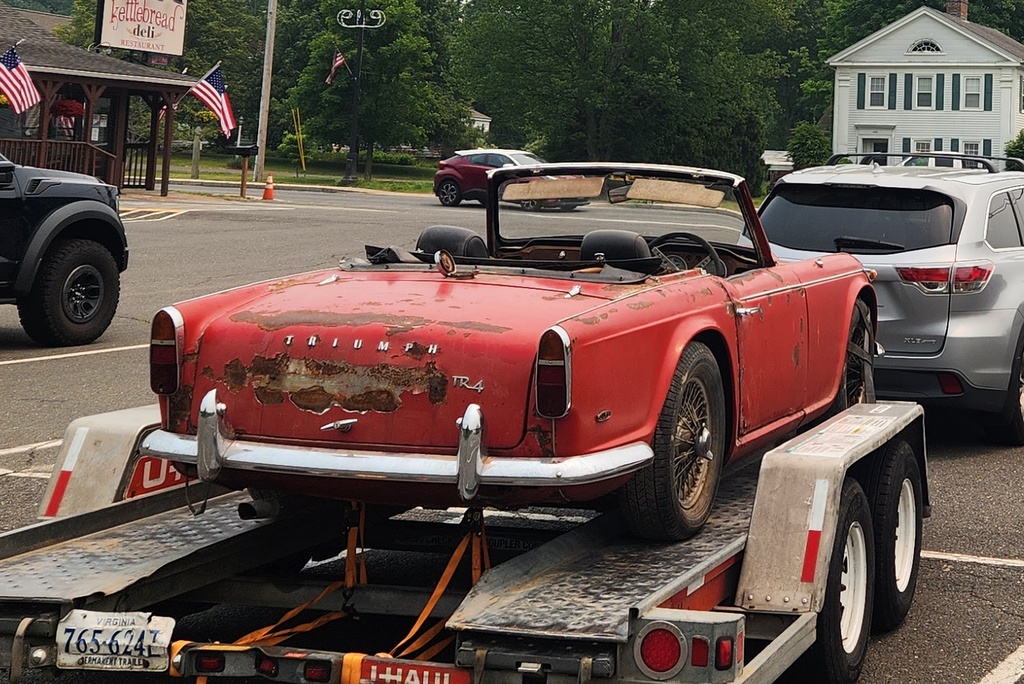
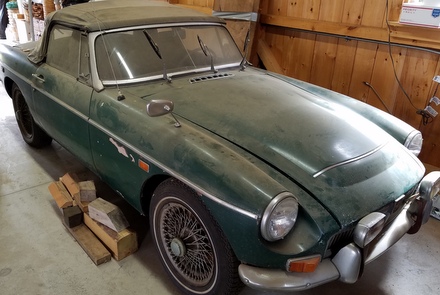
This is pretty different for me...but I have had a brush with a little British sports car when my brother had an early 70's MG Midget in the early 80's (It was a 10 year old car haha). It was orange, fun, handled like a go cart, and even though it never ran for more than 2 weeks straight without a break down, I thought it would be cool to someday own something like it.
And indeed, about 8 years ago, I became aware of a one owner MGC. A tacit understanding came about for me to have first dibs to purchase it, but a deal never came to fruition. It was my fault; I didn't realize the MGCs (with the big 6 cylinder, big wheels, and bulging hood) are getting quite valuable nowadays.
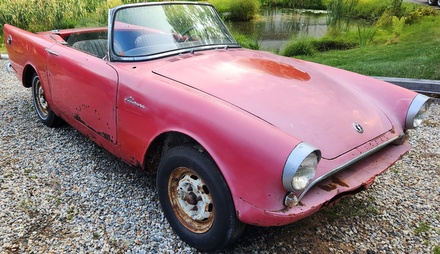
When I blew that deal, I had to actually put in some effort to find a new candidate. I knew I wanted something of a classic "little British sports car", so I started reading up on stuff I knew almost nothing about. My wife came up with something she saw on marketplace: a Sunbeam Alpine. We looked at it, but I didn't care for the styling so much:
The Triumph TR4
I soaked in more British sports car lore and came to admire the Triumph TR cars...more specifically the TR4, TR4A, and TR5/TR250 that were styled by Italian designer Giovanni Michelotti.
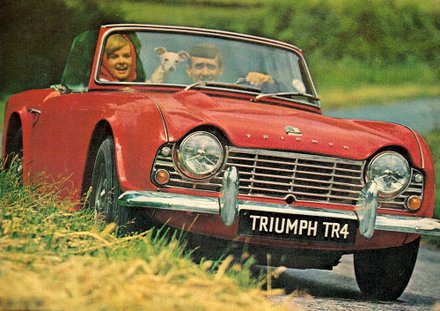
The "Michelotti cars" are just beautiful with a tincture of 50's to early 60's Italian style that still holds up well today. They've got cool, subtle vertical tail lamps, long front fenders, an awesome hood bulge for the two carbs, and big wheel openings for the large (for the day) 15" wheels. And like most cars of the 60's, they just have a nice simplicity...less plastic too. I wanted a TR4.
So with my new-found appreciation for this era of Triumphs, I soon found and ultimately purchased this terrifically crusty 1963 Triumph TR4 not too far from me in the summer of 2023:
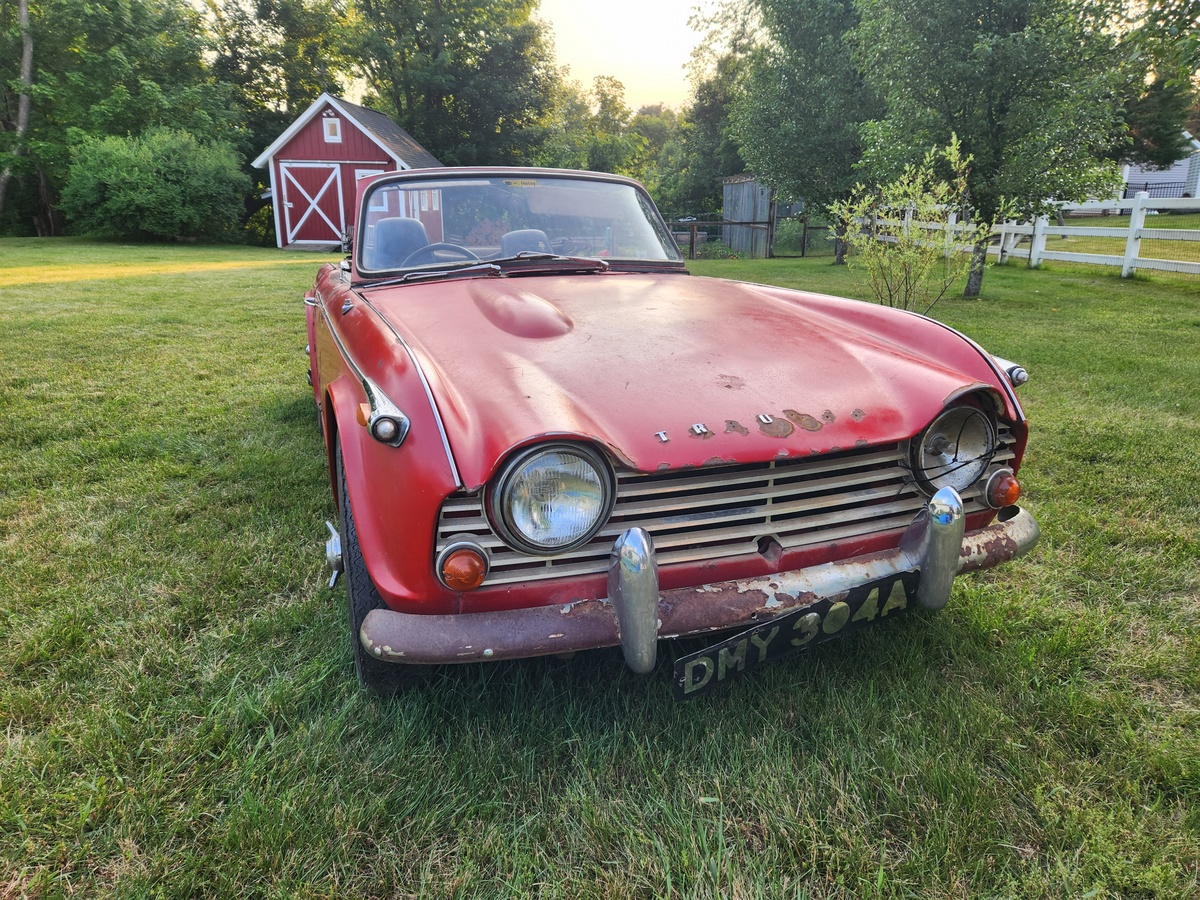
Since I hadn't even broken ground on my garage expansion, I had to push the car onto a bed of pallets behind my shed and throw a tarp over it. That was almost two years ago, and since then I've spent less than 10 minutes going over the car.
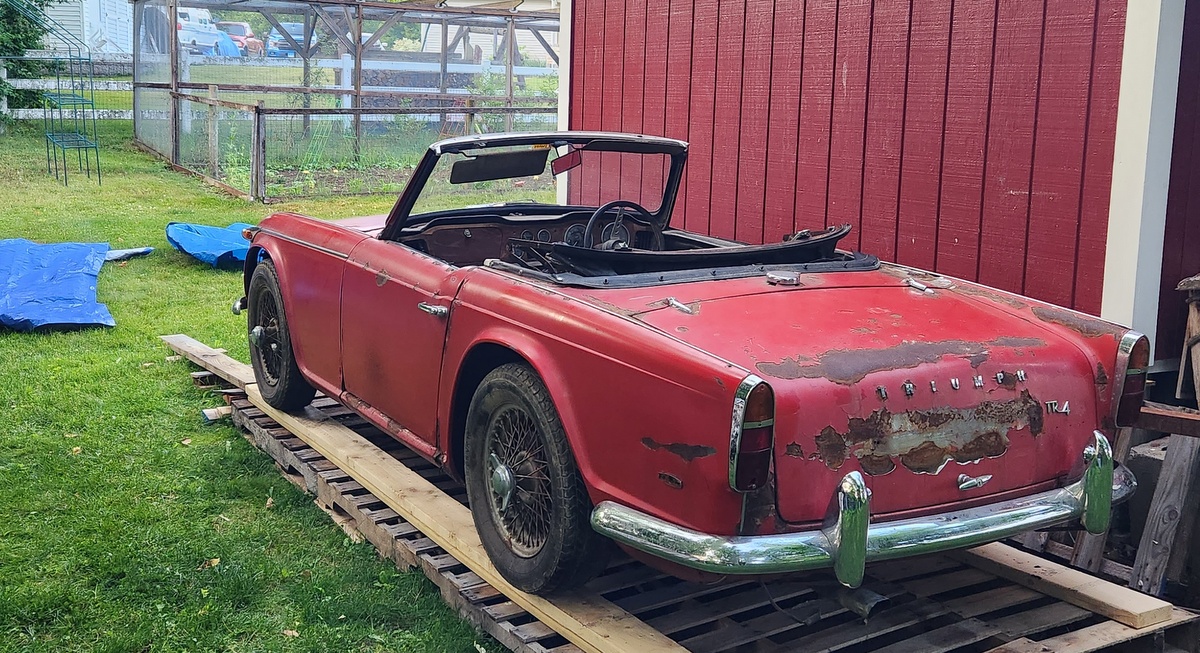
Since the car was so rough, I had no compunction to leaving it outdoors.
From 30 feet, at some angles, if you squint, it doesn't look that bad:
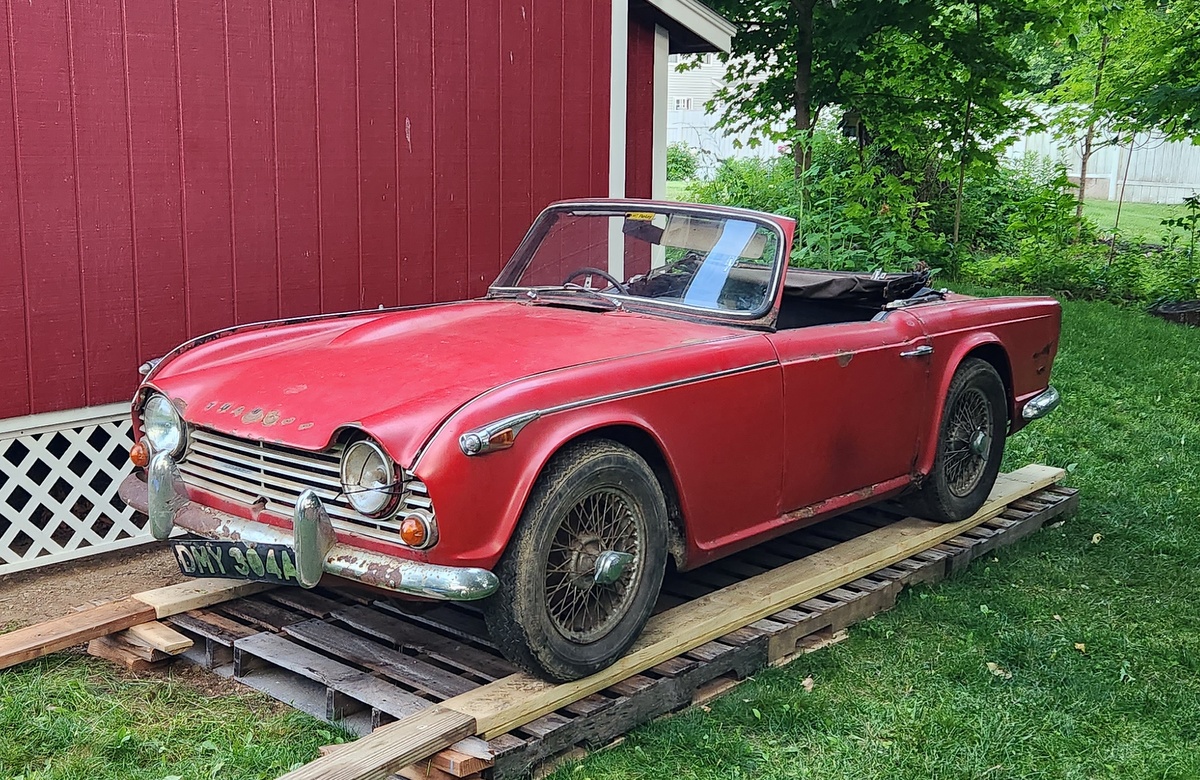
It is a "Home Market" car, which I later learned is one of a very small number of TR4's (about 2600 cars in the four year run of the TR4) that were made for the UK market. The UK registration plate affixed to the front bumper decodes as being issued in 1963 from Middlesex (a part of London before they shuffled all the counties in 1965) so I think it's possible she still has her original registration. In 1980, it was exported to the USA (per the paperwork I have) and from all I can see it fell into disuse.
A cursory glance indicates it had some rough times in its early life and was rebuilt with parts from a TR4A and a TR5. The engine is a later TR4A vintage, and an overdrive was installed at some point along the way.
Under the four or five layers of red lurks large swaths of unmistakable Conifer Green, which is great because I like green cars. My intention is to get it back to looking like it was when new. And a big part of that is to get rid of anything that is not "TR4", like the side trim, grille, convertible top frame which are later TR4A items.
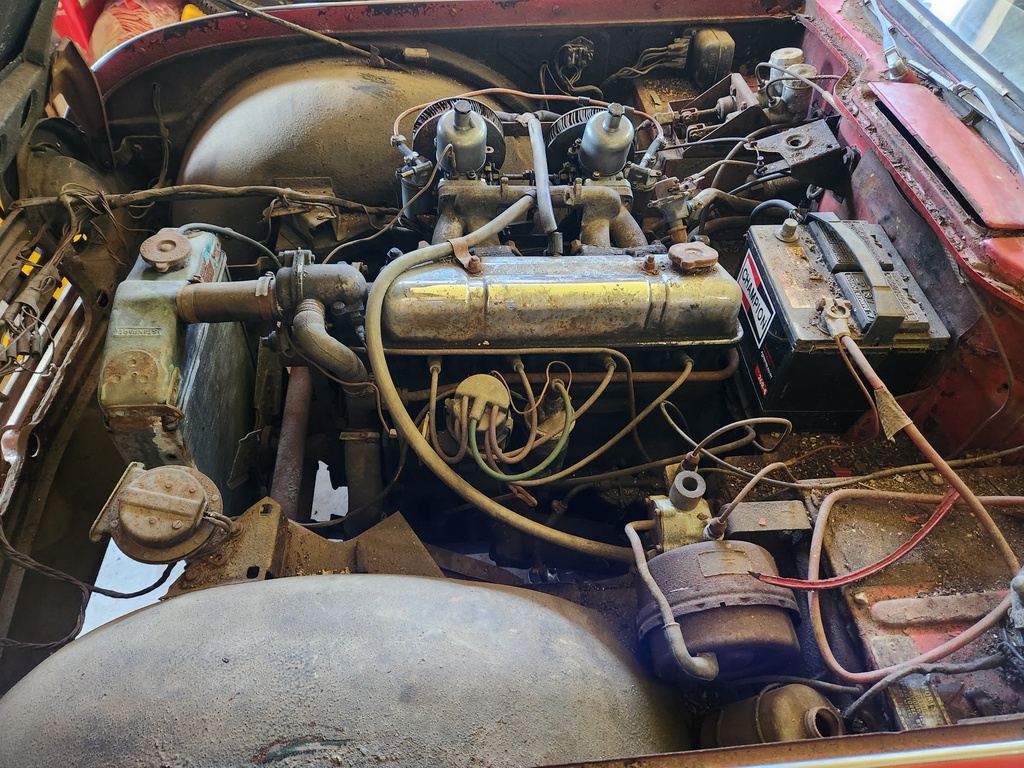
Some Random Features on Project TR4
*Positive earth electrical system
*Overdrive
*TR4A engine (that is not stuck and also has a TR4 exhaust manifold)
*Parts store steering wheel
*SU carburetors
*1969 TR6 tilting headrest seats
*TR4A grille
*Conifer green paint under 4 or 5 layers of red
*Wire wheels
*RHD
*Non-sealed headlamps with "city lights" (low watt bulbs protruding
into the main reflectors)
Plans
I plan on taking the car completely down to elemental bits, then stabilize the severely rusted shell and replace all the damage one piece at a time. I'll patiently keep a lookout for all the parts I'm going to need. I've aready procured rocker panels, a correct steering wheel, floor pans and some tools that will aid in making up all these sheet metal patches.
Before I began blasting the car apart, I had a go at starting the engine....with sucess! Check back for THAT entry!
SFS
Links:
Willys Jeep CJ3A Forum
There exists a nice set of webpages for CJ3A's. It's got a forum too that caters to both '3A's and CJ3B's. It's a great resource, and frequented by very knowledgible folks.
1967 GTO Original Owner
These two videos feature an original owner GTO. This car was featured in Hemmings Muscle Cars magazine a couple years ago. Part 2 has inside and outside shots of the owner driving the car. Very nicely done.
Blues Maker
"Mississippi" Fred McDowell. One of the great Bluesman. This is a documentary made in 1969.
Pinstripes
Pinstriping the ol' fashioned way. Pretty nice.
MGB Racecar
I've always liked MG's. Watch this MGB lift it's inside tire a few inches off the tarmac when going "'round the bend". Awesome.
Pepsi Throwback

Pepsi has put out a "limited edition Throwback" version of Pepsi with REAL sugar, instead of high fructose corn syrup which has been used since the 80's. Holy cow there IS a difference; it's WAY better. Find some quick!